
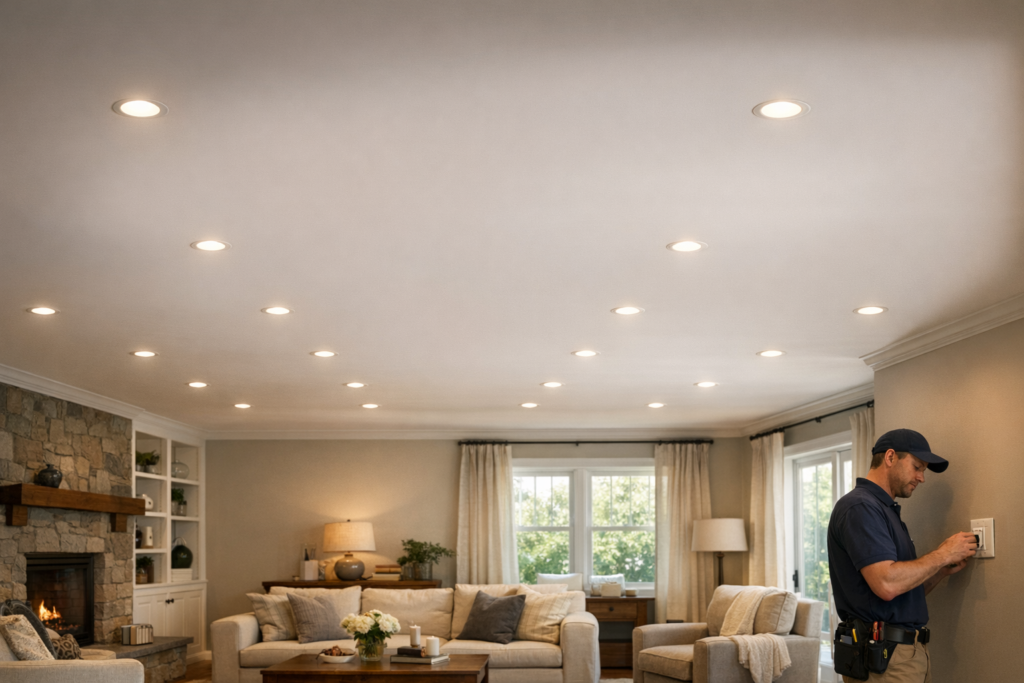
Recessed lighting can change the way your home looks, feels, and functions by adding clean, even illumination without bulky fixtures. The best recessed lighting ideas go beyond simply placing lights in the ceiling. A well-designed layout can make rooms feel larger, improve visibility, highlight architectural details, support everyday routines, and create a more comfortable atmosphere throughout the home.
For homeowners in New Hampshire, Massachusetts, Maine, and Vermont, recessed lighting is especially useful in both older homes and newer construction. It can brighten rooms with limited natural light, modernize dated spaces, and provide flexible lighting for kitchens, living rooms, bathrooms, basements, hallways, and home offices. The key is planning the installation correctly so the lighting looks intentional, performs reliably, and is safely installed by a qualified electrical contractor.
Why Recessed Lighting Has Such a Big Impact
Recessed lights, sometimes called can lights or downlights, sit flush with the ceiling and direct light downward. Because the fixtures do not hang into the room, they create a clean appearance that works with traditional, modern, transitional, and commercial-style interiors.
The real advantage is control. Recessed lighting can provide broad general illumination, focused task lighting, soft accent lighting, or layered lighting when paired with pendants, sconces, lamps, or under-cabinet lights. Instead of relying on one central ceiling fixture, you can distribute light where it is actually needed.
That flexibility makes recessed lighting especially valuable in homes with low ceilings, open floor plans, finished basements, kitchens, and multipurpose rooms where a single fixture cannot adequately serve the entire space.
Smart Recessed Lighting Ideas For Different Areas Of The Home
The right recessed lighting plan depends on how each room is used. A kitchen needs clear task lighting. A living room may need softer, dimmable lighting. A hallway needs safe, even illumination. Thinking about daily use before choosing fixtures helps prevent glare, shadows, and poorly lit areas.
Kitchen Recessed Lighting
Kitchens are one of the best places for recessed lighting because they require strong, dependable illumination for cooking, cleaning, and gathering. Recessed fixtures can be placed to brighten countertops, walkways, islands, sinks, and work zones.
A common mistake is placing lights only in the center of the kitchen. This can leave countertops in shadow because the person working at the counter blocks the light. Better layouts position lights closer to the task areas while still maintaining a balanced appearance across the ceiling.
For a more complete kitchen lighting plan, recessed lights can be combined with under-cabinet lighting, pendant lighting over an island, and dimmer controls for flexibility during meals or entertaining.
Living Room And Family Room Lighting
In living rooms and family rooms, recessed lighting should feel comfortable rather than harsh. Dimmable LED recessed lights allow the same room to support reading, watching television, entertaining, or relaxing in the evening.
Accent recessed lights can also be used to highlight fireplaces, built-in shelving, artwork, or textured walls. Instead of flooding the entire room with the same brightness, a layered approach creates depth and makes the space feel more refined.
Bathroom Recessed Lighting
Bathrooms benefit from bright, practical lighting, but fixture selection matters. Recessed lights used in wet or damp areas should be selected for the environment where they will be installed. Shower areas, tub areas, and spaces with high humidity require appropriate fixtures and professional installation.
Recessed lights can work well over showers, near vanities, and in general ceiling areas, but they should not be the only source of face-level lighting at a mirror. Pairing ceiling lights with vanity lighting helps reduce shadows and improves visibility for grooming tasks.
Basement And Finished Lower-Level Lighting
Finished basements often have lower ceilings, limited windows, and structural obstructions. Recessed lighting is a strong solution because it preserves ceiling height while providing bright, even coverage.
In New England homes, basements may serve as recreation rooms, home offices, guest spaces, workshops, or storage areas. Each use may require a different brightness level, fixture layout, and switching arrangement. A licensed electrician can help determine where recessed fixtures can be safely installed around joists, ductwork, plumbing, and existing wiring.
Hallways, Stairways, And Entry Areas
Recessed lights can make transition areas safer and more inviting. Hallways, stairways, mudrooms, and entry areas need reliable illumination to reduce trip hazards and improve visibility during early mornings, evenings, and winter months when daylight is limited.
For convenience, these areas often benefit from properly placed switches, three-way switching, occupancy sensors, or smart lighting controls, depending on the layout and the needs of the household.
How To Plan A Recessed Lighting Layout
A successful recessed lighting installation starts with layout, not fixture selection. The goal is to place light where it supports the room, rather than simply spacing fixtures in a grid. Ceiling height, room dimensions, furniture placement, paint colors, natural light, and the purpose of the space all affect the final plan.
Important planning questions include:
- What activities happen in this room?
- Where are the main task areas?
- Are there architectural features worth highlighting?
- Will the lights be used daily, occasionally, or primarily at night?
- Should the lighting be bright, soft, adjustable, or zoned?
- Are there ceiling obstructions such as framing, ductwork, pipes, or insulation?
Fixture spacing should be balanced, but perfect symmetry is not always the best answer. In many homes, especially older properties throughout New Hampshire, Massachusetts, Maine, and Vermont, ceiling framing and existing electrical conditions may require thoughtful adjustments. A professional layout accounts for both appearance and what is practical behind the ceiling.
Choosing The Right Recessed Light Fixtures
Not all recessed lights are the same. The fixture type, trim style, beam angle, color temperature, brightness, and control method all influence the final result. Choosing the wrong combination can make a room feel too dim, too bright, too cold, or visually uneven.
LED Recessed Lighting
LED recessed lighting is the standard choice for most modern home upgrades because it is energy efficient, long lasting, and available in a wide range of brightness levels and color temperatures. LEDs also produce less heat than older incandescent lighting, which can improve efficiency and comfort.
For living areas, many homeowners prefer warmer light that feels comfortable in the evening. Kitchens, bathrooms, laundry rooms, and work areas may benefit from a slightly cleaner, brighter appearance. The best choice depends on the room, finishes, and personal preference.
Trim Styles And Beam Spread
Trim affects both appearance and performance. Some trims reduce glare, some direct light toward a wall or feature, and others provide general downward illumination. Adjustable trims can be useful for accent lighting, while low-glare trims are often preferred in living spaces and bedrooms.
Beam spread also matters. A narrow beam creates focused light, while a wider beam provides broader coverage. Matching beam spread to the room prevents bright spots, dark corners, and uncomfortable contrast.
Dimmers And Lighting Controls
Dimmers are one of the most practical upgrades for recessed lighting. They allow bright illumination when needed and softer light when the room is used for relaxing, dining, or watching television.
When installing LED recessed lights, dimmers and fixtures should be compatible. Mismatched components can cause flickering, buzzing, limited dimming range, or inconsistent performance. A licensed electrician can help select properly matched controls and install them safely.
Electrical Considerations Before Installing Recessed Lighting
Recessed lighting installation involves more than cutting ceiling openings and connecting fixtures. The existing electrical system must be evaluated to confirm that wiring, circuits, switches, controls, and fixture locations are suitable for the installation.
Important electrical considerations include:
- Whether the existing circuit can support the added lighting load
- How the lights will be switched or zoned
- Whether new wiring must be routed through finished ceilings or walls
- Fixture compatibility with insulation and ceiling conditions
- Moisture-rated fixture needs in bathrooms or other damp locations
- Access limitations in older homes, attics, and finished spaces
- Compatibility between LED fixtures, dimmers, and smart controls
Recessed lighting should be installed by a qualified electrician. Opening ceilings, modifying wiring, and working near insulation or structural components can create safety risks if the work is not done correctly. Professional installation helps protect the home, maintain system reliability, and reduce the chance of overheating, nuisance tripping, flickering, or future repair issues.
Recessed Lighting Ideas For Older New England Homes
Many homes throughout New Hampshire, Massachusetts, Maine, and Vermont were built before modern lighting expectations. Older homes may have fewer ceiling fixtures, limited switch locations, aging wiring, plaster ceilings, or electrical panels that were not designed for today’s electrical demands.
Recessed lighting can be an excellent modernization strategy, but older homes require careful evaluation. In some cases, an electrician may recommend wiring updates, new switching, panel evaluation, or additional electrical improvements before or during the lighting project.
Ceiling construction can also affect installation. Plaster, lathe, older framing, limited attic access, and previous renovations may make the project more complex than it appears from inside the room. Planning ahead helps avoid unnecessary ceiling damage and supports a cleaner finished result.
Common Recessed Lighting Mistakes To Avoid
Recessed lighting looks simple when finished, but small planning errors can have a major effect on comfort and appearance. Avoiding these mistakes can save frustration and help protect your investment.
- Using too few lights: Sparse placement can leave dark corners and make the room feel unfinished.
- Using too many lights: Over-lighting can create glare and make a comfortable room feel commercial or harsh.
- Ignoring task areas: Lights should support how the room is used, especially in kitchens, offices, bathrooms, and laundry rooms.
- Skipping dimmers: Without dimming, recessed lights may feel too bright during evenings or relaxed activities.
- Choosing the wrong color temperature: Light that is too cool or too warm can clash with finishes and change the feel of the room.
- Not considering ceiling conditions: Joists, ductwork, pipes, and insulation can affect fixture placement and wiring routes.
- Attempting unsafe DIY wiring: Incorrect electrical work can create shock, fire, and reliability hazards.
Can Recessed Lighting Improve Energy Efficiency?
Yes, recessed lighting can improve energy efficiency when modern LED fixtures and smart controls are used correctly. LEDs typically use significantly less energy than older incandescent fixtures while providing strong, consistent illumination. Dimmers, occupancy sensors, and zoned switching can also reduce unnecessary energy use.
Energy efficiency is not only about the fixture. A thoughtful lighting plan prevents over-lighting, reduces wasted illumination, and gives homeowners more control over how each space is used. This is especially helpful during long New England winters when indoor lighting is used for more hours each day.
What A Professional Electrician Brings To The Project
A professional electrical contractor helps turn recessed lighting ideas into a safe, attractive, and practical installation. The process typically includes evaluating the room, reviewing the existing electrical system, identifying ceiling limitations, recommending fixture options, planning switching or dimming, and installing the lights with attention to safety and long-term performance.
Electrical Constructors LLC provides residential and commercial electrical services throughout New Hampshire, Massachusetts, Maine, and Vermont, including lighting installation, electrical troubleshooting, panel upgrades, service upgrades, inspections, and electrical system improvements. For recessed lighting projects, professional planning can make the difference between a basic installation and a lighting design that truly improves the home.
Final Thoughts On Recessed Lighting
The best recessed lighting ideas combine design, safety, efficiency, and everyday function. A properly planned installation can brighten dark rooms, modernize older spaces, improve visibility, highlight important features, and make the entire home feel more comfortable.
Before installing recessed lights, consider how each room is used, what level of control you want, whether dimmers or smart controls make sense, and what electrical conditions may exist above the ceiling. With the right fixture choices and professional installation, recessed lighting can be one of the most effective upgrades you make to your home.