
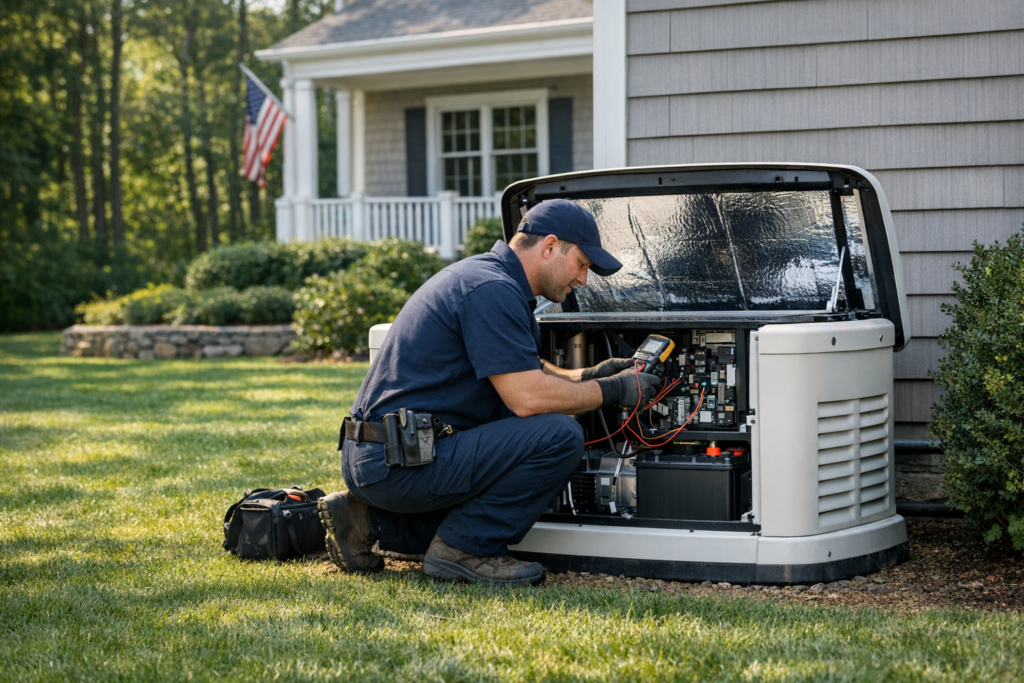
Most standby generators should be professionally serviced at least once per year, but many homes and businesses benefit from service every six months, especially if the generator runs frequently, protects critical equipment, or operates in harsh New England weather. Standby generator maintenance helps ensure the system starts when utility power fails, carries the electrical load safely, and avoids preventable breakdowns during storms, winter outages, and extended power interruptions.
The Short Answer: How Often Should a Standby Generator Be Serviced?
For most residential standby generators, annual maintenance is the minimum recommended schedule. This typically includes inspection, testing, oil and filter service when due, battery testing, electrical connection checks, and verification that the generator transfers power properly.
However, annual service is not always enough. A standby generator may need more frequent maintenance if:
- It runs for many hours during outages.
- It serves a business, rental property, medical equipment, refrigeration, sump pumps, or other high-priority loads.
- It is exposed to heavy snow, ice, coastal moisture, wind-driven rain, or extreme temperature swings.
- It is older or has a history of hard starting, faults, or shutdowns.
- The manufacturer recommends more frequent service based on run hours.
A good rule of thumb is simple: service the generator at least once a year, check it after any extended outage, and follow the manufacturer’s run-hour intervals for oil, filters, spark plugs, coolant, and other components.
Why Routine Standby Generator Maintenance Matters
A standby generator is different from many other pieces of electrical equipment because it may sit unused for weeks or months, then suddenly be expected to power essential circuits during an emergency. That combination of long idle periods and high-stress operation makes preventative maintenance especially important.
Routine standby generator maintenance helps identify small issues before they become outage-day failures. A weak battery, low oil level, clogged air filter, loose electrical connection, or blocked intake can prevent the generator from starting or cause it to shut down under load.
In New Hampshire, Massachusetts, Maine, and Vermont, generator reliability is especially important because severe winter weather, heavy snow, ice storms, high winds, and downed utility lines can create prolonged outages. A generator that has not been inspected may still exercise weekly, but that does not guarantee it will perform correctly when the home or building actually needs backup power.
What Professional Generator Service Typically Includes
Standby generator maintenance should be performed by a qualified professional who understands both the engine side and the electrical side of the system. A standby generator is not just a small engine. It is part of the electrical infrastructure of a home or commercial property, usually connected through an automatic transfer switch and integrated with selected electrical loads.
A typical maintenance visit may include:
- Visual inspection of the generator enclosure, base, ventilation openings, wiring, and surrounding area.
- Oil and oil filter replacement when required by time or run hours.
- Air filter inspection and replacement when dirty or due for service.
- Spark plug inspection or replacement on applicable units.
- Battery voltage and load testing.
- Battery terminal cleaning and connection inspection.
- Fuel system inspection for natural gas, propane, or diesel systems, depending on the unit.
- Coolant level and hose inspection on liquid-cooled models.
- Belts, hoses, clamps, and fittings inspection where applicable.
- Electrical connection checks for signs of looseness, corrosion, overheating, or damage.
- Automatic transfer switch inspection and functional testing when appropriate.
- Control panel review for fault codes, maintenance reminders, and event history.
- Exercise cycle verification.
- Operational test to confirm proper startup and shutdown.
The exact service checklist depends on the generator model, fuel type, manufacturer recommendations, run hours, and whether the system is residential, commercial, or industrial.
Annual Service vs. Run-Hour-Based Service
Many standby generators use two maintenance triggers: calendar time and operating hours. Calendar-based maintenance accounts for aging oil, battery condition, corrosion, environmental exposure, and components that degrade over time. Run-hour-based maintenance accounts for actual engine use.
For example, a generator that runs only during weekly exercise cycles may still need annual service even if it has very low runtime. Oil, gaskets, batteries, electrical connections, and air filters can still be affected by time, moisture, temperature changes, and debris.
On the other hand, a generator that runs for two or three days during a major storm may reach a service interval much sooner than expected. After an extended outage, it is wise to schedule an inspection, especially if the generator operated under heavy load, displayed a warning, used noticeable oil, or sounded different than usual.
Commercial standby generators often require more structured preventative maintenance schedules because downtime can affect operations, tenants, inventory, security systems, communications, or life-safety-related equipment. Businesses and property managers should treat generator service as part of the facility’s overall electrical maintenance plan.
Maintenance After a Long Power Outage
Any standby generator that has run for an extended period should be checked after the outage ends. Long runtimes create heat, vibration, fuel demand, and normal engine wear. Waiting until the next scheduled annual service can allow a minor issue to go unresolved.
After a long outage, a professional may check:
- Oil level and oil condition.
- Airflow and debris around the enclosure.
- Battery health and charging performance.
- Fault codes or warning history.
- Signs of overheating, leaks, corrosion, or vibration-related loosening.
- Transfer switch operation and load performance.
This is especially important in winter, when drifting snow, ice buildup, and freezing temperatures can restrict airflow or block exhaust areas. A standby generator must be able to breathe properly and safely discharge exhaust. Snow and debris should never be allowed to accumulate against the unit.
Warning Signs Your Generator Needs Service Sooner
Do not wait for the next scheduled maintenance visit if your generator shows signs of trouble. Backup power equipment should be inspected promptly when something changes in how it starts, runs, sounds, or transfers power.
Common warning signs include:
- The generator fails to complete its exercise cycle.
- The unit cranks slowly or does not start.
- The control panel shows warning lights, alerts, or fault codes.
- You hear unusual vibration, knocking, surging, or rough running.
- The generator starts but shuts down shortly afterward.
- The automatic transfer switch does not operate as expected.
- Lights flicker excessively while the generator is running.
- You notice fuel odor, oil leakage, coolant leakage, corrosion, or burning smells.
- The battery is more than a few years old or has failed a test.
- The generator has not been professionally inspected in over a year.
Safety warning: Do not remove generator panels, handle internal wiring, bypass safety controls, or work inside a transfer switch unless you are qualified to do so. Standby generators can involve utility power, generator power, battery circuits, fuel systems, and hazardous voltage.
Why the Battery Deserves Special Attention
The battery is one of the most common reasons a standby generator fails to start. Even if the engine, fuel supply, and electrical components are in good condition, a weak battery can leave the system unable to crank during an outage.
Battery problems are not always obvious. A generator may appear normal during a quick visual check, yet still have inadequate battery capacity under load. Cold weather can make weak batteries worse, which is an important concern throughout northern New England.
Professional standby generator maintenance should include battery testing, terminal inspection, charger verification, and evaluation of any corrosion or loose connections. Replacing a weak battery before storm season is far less disruptive than discovering the problem during an outage.
Do Weekly Exercise Cycles Replace Maintenance?
No. A weekly exercise cycle is helpful, but it does not replace professional maintenance. The exercise cycle helps keep internal components moving, confirms that the generator can start, and may allow the system to detect certain faults. However, it does not fully evaluate the generator under real outage conditions.
A generator can pass an exercise cycle and still have problems with load handling, the transfer switch, battery condition, fuel delivery, dirty filters, low fluids, loose connections, or aging components. Exercise cycles are part of generator care, not a substitute for inspection and service.
If you do not hear your generator exercise as scheduled, or if the sound changes noticeably, schedule service. A missed exercise cycle can indicate a disabled setting, discharged battery, fault condition, or other issue that should be addressed before the next storm.
Residential Standby Generator Maintenance Considerations
For homeowners, standby generator maintenance usually focuses on reliability, safety, and protecting essential household systems. A properly maintained generator can keep heat, refrigeration, water systems, sump pumps, lighting, communications, and selected outlets available during outages.
Homeowners should keep the area around the generator clear throughout the year. Leaves, grass clippings, shrubs, stored items, snow, and ice can interfere with airflow and service access. The generator should not become a storage area, and landscaping should not block ventilation.
Older homes across New Hampshire, Massachusetts, Maine, and Vermont may also have electrical systems that have been modified over many years. If a generator was installed before recent renovations, additions, EV charger installations, or new high-demand appliances, the backup load plan may need to be reviewed. The generator and transfer equipment should match the home’s current electrical needs, not the needs it had years ago.
Commercial Generator Maintenance Considerations
Commercial properties often depend on standby power for more than convenience. Backup generation may support security systems, servers, refrigeration, pumps, access controls, emergency lighting, tenant operations, communications, or production equipment.
For businesses, property managers, and facility managers, generator maintenance should be documented and scheduled proactively. Waiting until a fault appears can create avoidable risk. Commercial systems may also need load testing, transfer switch inspection, fuel system review, and closer coordination with building operations.
Properties with seasonal occupancy, high electrical demand, sensitive electronics, or multiple tenants should review generator maintenance as part of broader electrical preventative maintenance. This can help identify aging panels, overloaded circuits, surge protection needs, and transfer equipment concerns before they affect building reliability.
Common Generator Maintenance Mistakes to Avoid
Many generator problems are preventable. The most common mistakes usually come from assuming that because the generator is quiet most of the year, it does not need attention.
- Skipping annual service: Low runtime does not eliminate the need for inspection, testing, and routine care.
- Ignoring fault codes: A warning light or fault history should be investigated before the next outage.
- Letting snow or debris block the unit: Restricted airflow can affect performance and safety.
- Forgetting about the transfer switch: The transfer switch is essential to safe automatic operation and should be part of the maintenance conversation.
- Assuming exercise cycles prove full reliability: Exercise runs are useful, but they do not replace professional testing.
- Changing electrical loads without review: New equipment, additions, and renovations can change what the generator is expected to support.
- Attempting unsafe DIY repairs: Generator systems involve electricity, moving parts, fuel, and exhaust hazards.
Seasonal Maintenance for New England Weather
Standby generators in New England need to be ready before storms arrive, not after the forecast becomes urgent. Seasonal planning is especially important before winter, when outages can affect heating systems, sump pumps, wells, and essential household or business operations.
Before winter, property owners should confirm that the generator has been serviced, the battery has been tested, the area around the unit is clear, and the exercise cycle is operating properly. After major snow events, make sure snow has not piled against the enclosure or exhaust path.
Before summer, maintenance is also worthwhile. Thunderstorms, high winds, heat-related electrical demand, and utility disruptions can all lead to outages. Businesses with refrigeration, HVAC needs, or sensitive electronics should not think of generator preparedness as only a winter concern.
How Standby Generator Maintenance Protects the Electrical System
A standby generator works with the building’s electrical system through transfer equipment. When utility power fails, the transfer switch separates the building from the utility supply and allows generator power to serve designated loads. When utility power returns, the system transfers back.
Because this process involves switching power sources, maintenance is not just about the generator engine. Electrical connections, control wiring, grounding and bonding considerations, load management equipment, surge protection, and panel condition can all affect long-term reliability.
A qualified electrical contractor can evaluate whether the generator system is still appropriate for the property’s electrical demands. This is especially valuable when a home or business has added heat pumps, electric water heating, commercial equipment, EV charging, kitchen equipment, data systems, or other significant electrical loads.
Can You Do Any Generator Maintenance Yourself?
Property owners can perform basic visual checks, but they should avoid electrical or mechanical work unless properly qualified. Safe owner-level care may include keeping vegetation trimmed, removing leaves from around the unit, checking that snow is not blocking ventilation, listening for the weekly exercise cycle, and noting any alerts on the control panel.
Do not open electrical compartments, work inside the transfer switch, disconnect wiring, bypass safety features, handle gas connections, or attempt repairs based on online advice. If something appears wrong, schedule professional service.
It is also helpful to keep a simple maintenance record. Note the date of professional service, outage runtimes, warning messages, battery replacements, and any unusual operating conditions. This information helps technicians diagnose issues more efficiently.
Best Maintenance Schedule for Reliable Backup Power
The best schedule depends on the generator, property type, fuel source, run hours, and risk tolerance. For many homeowners, a practical schedule looks like this:
- Professional service once per year at minimum.
- Additional inspection after extended outage operation.
- More frequent service for older units or systems with known issues.
- Battery testing during routine service and before severe weather seasons.
- Regular owner visual checks for snow, debris, damage, or alerts.
For commercial and multi-unit properties, a semiannual or customized preventative maintenance plan is often a better fit. Critical facilities, high-demand operations, and properties with sensitive equipment should avoid relying on a minimal service schedule.
When to Schedule Standby Generator Service
The best time to schedule standby generator maintenance is before you need the generator. Many property owners wait until storm season, but service appointments can become harder to schedule when severe weather is approaching.
Consider scheduling service:
- Before winter storm season.
- Before summer thunderstorm season.
- After any outage with extended generator runtime.
- When the generator displays an alert or fails an exercise cycle.
- After renovations or electrical load changes.
- If service history is unknown.
Electrical Constructors LLC provides residential and commercial electrical services throughout New Hampshire, Massachusetts, Maine, and Vermont, including generator installation, generator maintenance support, electrical inspections, service upgrades, troubleshooting, and backup power planning. If your standby generator has not been serviced recently, a professional inspection can help confirm that it is ready for the next outage.
Final Takeaway
Standby generator maintenance should be performed at least annually, with additional service based on runtime, weather exposure, property use, and manufacturer recommendations. A generator is an emergency system, and emergency systems should not be left to chance.
Routine maintenance protects the engine, battery, transfer equipment, electrical connections, and overall reliability of the backup power system. Whether you manage a commercial property or want dependable power for your home, proactive service is the best way to know your generator is prepared before the lights go out.