
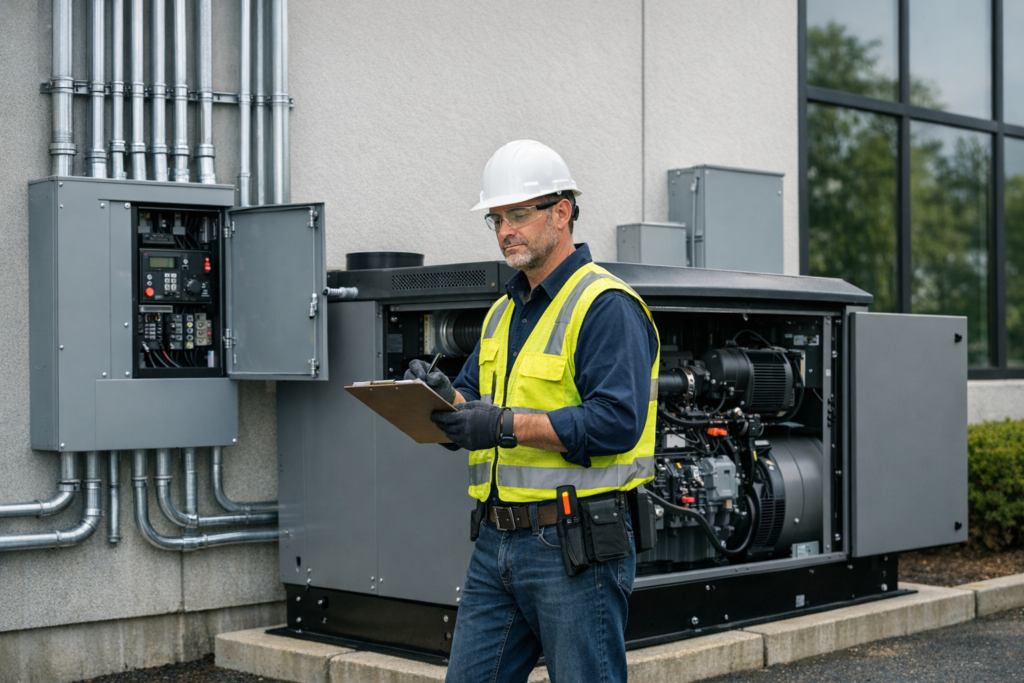
Unexpected power outages can stop transactions, shut down equipment, disable security systems, interrupt heating or cooling, and put employees, tenants, customers, or residents at risk. Effective business backup power planning helps organizations identify their most critical electrical loads, choose the right backup power solution, and keep operations as safe and reliable as possible when the utility grid goes down.
Why Power Outage Planning Matters for Businesses
For many businesses, a power outage is more than an inconvenience. Even a short interruption can affect productivity, revenue, refrigeration, communications, life safety systems, building access, sump pumps, IT equipment, manufacturing processes, and customer experience.
In New Hampshire, Massachusetts, Maine, and Vermont, severe winter weather, heavy snow, ice, wind, fallen trees, and aging utility infrastructure can all contribute to outages. Businesses that prepare before an emergency are in a much better position than those trying to make decisions after the lights go out.
A strong outage plan should answer several practical questions:
- Which systems must remain powered for safety and continuity?
- How long can the business operate without utility power?
- What type and size of generator or backup power system is appropriate?
- Is the existing electrical service ready for backup power equipment?
- Who is responsible for testing, fueling, maintenance, and response?
- Are employees trained on what to do during an outage?
Start With a Critical Load Assessment
The first step in business backup power planning is identifying what truly needs to stay on. Not every circuit in a building needs backup power. In many cases, attempting to power everything can lead to unnecessary cost, oversized equipment, fuel waste, and more complex installation requirements.
A critical load assessment reviews the electrical systems that support business continuity, safety, property protection, and regulatory needs. These may include:
- Emergency and egress lighting
- Fire alarm and security systems
- Network equipment, servers, and point-of-sale systems
- Refrigeration, freezers, or temperature-controlled storage
- Heating equipment, boiler controls, or essential HVAC components
- Sump pumps, sewage ejector pumps, or water treatment equipment
- Access control, overhead doors, and gate systems
- Medical, laboratory, industrial, or production equipment
- Elevator or accessibility equipment where applicable
An experienced commercial electrician can evaluate existing panels, circuits, service capacity, equipment nameplates, startup loads, and operating priorities to help determine what should be connected to backup power.
Understand the Difference Between Portable, Standby, and UPS Backup
Backup power systems are not one-size-fits-all. The right solution depends on the facility, electrical load, outage risk, budget, fuel availability, and the importance of uninterrupted operation.
Portable Generators
Portable generators can provide temporary power for selected equipment, but they are usually not the best long-term solution for most commercial facilities. They require manual setup, safe outdoor placement, fueling, proper connection equipment, and careful load management.
Safety warning: A portable generator should never be connected directly to a building electrical system without approved transfer equipment installed by a qualified electrician. Improper connections can create fire hazards, equipment damage, carbon monoxide risks, and dangerous backfeeding into utility lines.
Commercial Standby Generators
A standby generator is permanently installed and connected to the building through transfer equipment. When utility power fails, the system can start automatically and supply designated circuits or larger portions of the facility, depending on the design.
Standby generators are often a better fit for businesses that cannot afford extended downtime, need to protect inventory, operate during storms, maintain tenant services, or support critical building systems.
Uninterruptible Power Supply Systems
A UPS provides short-term battery backup for sensitive electronics such as servers, networking equipment, phone systems, security systems, and control equipment. A UPS is not a replacement for a generator, but it can bridge the gap between utility failure and generator startup while helping protect electronics from abrupt shutdowns.
For many businesses, the strongest approach combines surge protection, UPS equipment for sensitive systems, and a properly sized standby generator for longer outages.
Plan for Transfer Equipment and Safe Electrical Integration
The transfer switch is one of the most important components in a backup power system. It safely separates utility power from generator power and directs power to the selected circuits or electrical distribution equipment.
Depending on the facility and backup strategy, transfer equipment may be manual or automatic. An automatic transfer switch can detect a utility outage, signal the generator to start, transfer power to selected loads, and then switch back when utility power is restored.
Proper integration requires careful attention to:
- Generator capacity and circuit load calculations
- Electrical service size and panel configuration
- Single-phase or three-phase power requirements
- Voltage requirements for commercial equipment
- Startup current for motors, compressors, pumps, and HVAC equipment
- Load shedding or prioritization controls
- Clearance, ventilation, and equipment placement
- Grounding, bonding, and code-compliant installation practices
This is not an area for guesswork. Commercial generators must be planned and installed correctly to deliver dependable power without creating electrical hazards or damaging equipment.
Do Not Overlook Fuel Source and Runtime
Backup power planning should include a realistic discussion about fuel. A generator is only useful for as long as it can run safely and reliably. Common fuel considerations include availability, storage, delivery access, runtime expectations, maintenance, and winter performance.
Some businesses use natural gas where available, while others may rely on propane or diesel depending on the building, generator size, location, and operational needs. In New England, winter weather can complicate fuel deliveries and equipment access, so planning ahead is essential.
Important questions include:
- How many hours or days should the facility be able to operate?
- Will the generator support all critical loads continuously?
- Is fuel storage adequate for severe weather events?
- Can fuel be delivered if roads are affected by snow or ice?
- Who is responsible for monitoring fuel levels?
Protect Sensitive Equipment From Surges and Power Quality Problems
Power outages are often accompanied by voltage fluctuations, utility switching events, and surges when power is lost or restored. Sensitive electronics can be vulnerable during these events, especially in commercial buildings with servers, controls, refrigeration equipment, point-of-sale systems, and automated machinery.
Businesses should consider layered protection that may include whole-building surge protection, point-of-use surge protection for sensitive equipment, UPS systems, and proper grounding and bonding. Electrical panels, grounding systems, and older wiring should also be evaluated because backup power reliability depends on the condition of the overall electrical system.
Create a Written Outage Response Plan
Even the best generator system is only part of the solution. Businesses should have a written outage response plan that employees and managers understand before an emergency occurs.
A practical plan should identify:
- Who checks the electrical system and generator status
- Who contacts the electrical contractor or service provider
- Which equipment should be shut down before transfer or restart
- How critical systems are prioritized
- Where emergency lighting, flashlights, and contact information are kept
- How staff communicate if phones, internet, or access systems are affected
- When the facility should remain open, operate in limited mode, or close
For property managers and facility managers, the plan should also address tenant communication, building access, common area lighting, pumps, elevators where applicable, heating systems, and after-hours response procedures.
Schedule Preventative Maintenance Before Storm Season
A backup power system must be maintained if it is expected to work during an emergency. Generators that sit unused for long periods can develop battery problems, fuel issues, sensor faults, clogged filters, corrosion, or control failures.
Preventative maintenance may include:
- Generator exercise testing
- Battery inspection and replacement when needed
- Oil, coolant, belt, hose, and filter checks
- Transfer switch inspection and testing
- Load testing where appropriate
- Visual inspection for corrosion, pest damage, or weather exposure
- Verification that intake and exhaust areas are clear
- Review of maintenance logs and operating history
Businesses in New Hampshire, Massachusetts, Maine, and Vermont should consider reviewing backup power systems before winter weather arrives and again before peak seasonal demand if the facility relies on refrigeration, HVAC, hospitality operations, property management systems, or production equipment.
Review Your Existing Electrical Infrastructure
Backup power planning often reveals weaknesses in the existing electrical system. Older commercial buildings, converted properties, and facilities that have grown over time may have outdated panels, overloaded circuits, insufficient capacity, poor labeling, or equipment that no longer matches current operational needs.
An electrical inspection can help identify issues that may affect outage readiness, including:
- Panel capacity and condition
- Breaker labeling and circuit organization
- Obsolete or damaged electrical equipment
- Undersized circuits for modern loads
- Improper temporary wiring or extension cord use
- Grounding and bonding concerns
- Lighting, exit signs, and emergency system deficiencies
Correcting these problems before installing backup power can improve safety, simplify future maintenance, and make the entire system more dependable.
Common Backup Power Planning Mistakes
Many businesses wait until after a major outage to think about generator installation or electrical readiness. By then, equipment availability, scheduling, weather, and business disruption may make the process much harder.
Common mistakes include:
- Assuming a generator can power the entire building without load calculations
- Forgetting about motor startup loads and HVAC equipment demands
- Using portable generators without safe transfer equipment
- Failing to maintain generator batteries and fuel systems
- Not protecting sensitive electronics from surges
- Overlooking pumps, access systems, security equipment, or network closets
- Not training employees on outage procedures
- Waiting until severe weather is in the forecast to request service
The best time to plan is when the facility is operating normally, not during an emergency.
How a Licensed Commercial Electrician Supports Outage Readiness
A licensed commercial electrician helps turn business backup power planning into a safe, practical, and code-conscious electrical solution. The process typically includes evaluating the facility, identifying critical loads, reviewing existing electrical distribution, recommending appropriate generator and transfer equipment options, and installing the system properly.
Electrical Constructors LLC works with businesses, property managers, contractors, developers, and facility teams throughout New Hampshire, Massachusetts, Maine, and Vermont to support reliable electrical systems, generator readiness, electrical upgrades, inspections, troubleshooting, and preventative maintenance.
Whether a business needs a new standby generator, transfer switch installation, panel upgrades, surge protection, electrical repairs, or a more complete outage preparedness strategy, the right electrical planning can reduce downtime and improve safety when utility power is interrupted.
Prepare Before the Next Outage
Unexpected outages are unavoidable, but being unprepared is not. A thoughtful backup power plan helps protect people, equipment, property, revenue, and essential operations. By identifying critical loads, selecting the right backup power equipment, maintaining the system, and reviewing the condition of the building electrical infrastructure, businesses can respond to outages with greater confidence.
For commercial properties across New Hampshire, Massachusetts, Maine, and Vermont, proactive planning is especially important because winter storms, ice, wind, and seasonal electrical demands can challenge even well-managed facilities. Working with an experienced electrical contractor ensures the system is designed for real-world conditions and ready when it matters most.