
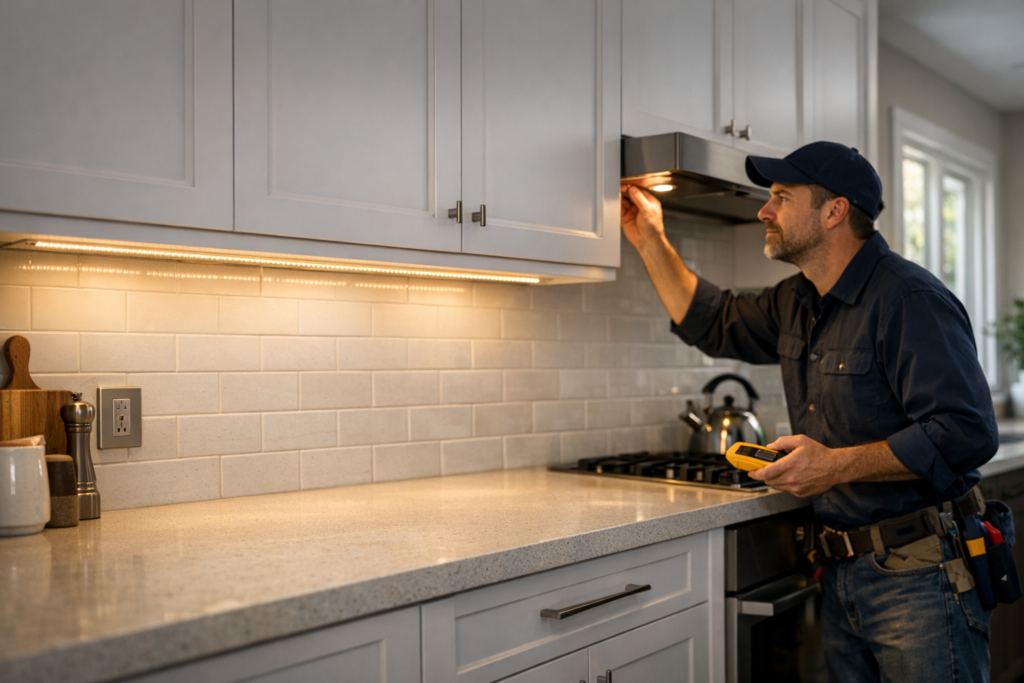
Under-cabinet lighting can make a modern kitchen safer, brighter, and more enjoyable to use by placing focused light exactly where food prep, cleaning, and daily tasks happen. A well-planned under cabinet lighting installation does more than add style; it reduces countertop shadows, improves visibility, highlights backsplash finishes, and gives the kitchen a finished, custom look.
Whether you are remodeling an older New England kitchen, updating a commercial breakroom, or improving a newly built home, the best results come from matching the fixture type, color temperature, controls, wiring method, and layout to how the space is actually used.
Why Under-Cabinet Lighting Matters in a Modern Kitchen
Ceiling lights alone often leave dark areas on counters because upper cabinets block light from reaching the workspace. Under-cabinet lighting solves this common problem by placing light below the cabinets and directly above the countertop.
For homeowners, that means better visibility when chopping vegetables, reading labels, making coffee, or cleaning up after dinner. For property managers and commercial spaces, it can improve usability, create a more polished appearance, and support safer day-to-day use of kitchen and food preparation areas.
In homes throughout New Hampshire, Massachusetts, Maine, and Vermont, many kitchens combine older electrical systems with modern appliances and lighting expectations. Adding under-cabinet lighting is often an excellent opportunity to assess whether the existing wiring, switching, and circuits are suitable for the upgrade.
Popular Under-Cabinet Lighting Options
The right fixture depends on the cabinet style, countertop material, desired brightness, and whether the goal is task lighting, accent lighting, or both. Modern LED options have largely replaced older incandescent and fluorescent cabinet lights because they are efficient, compact, long-lasting, and available in many color temperatures.
LED Light Bars
LED light bars are one of the most common choices for under-cabinet lighting because they provide consistent, even illumination across the counter. They work especially well under long cabinet runs where homeowners want a clean, continuous wash of light.
Light bars are available in different lengths and brightness levels. When professionally installed, they can often be positioned toward the front underside of the cabinet to spread light across the full countertop instead of only lighting the backsplash.
LED Tape or Strip Lighting
LED tape lighting is thin, flexible, and low-profile, making it useful for tight spaces, decorative details, and custom cabinet designs. It can create a sleek modern appearance when installed in a proper channel or diffuser.
For kitchens, the quality of the tape light matters. Low-quality strips may create uneven dots of light, inconsistent color, or premature failure. A professional under cabinet lighting installation typically uses appropriate power supplies, connectors, mounting channels, and dimming components to improve reliability and appearance.
Puck Lights
Puck lights create pools of focused light and can be useful for accent lighting, display cabinets, or smaller task areas. They can look attractive when spaced evenly, but they may create bright spots and darker gaps if they are the only source of under-cabinet illumination.
In modern kitchens, puck lights are often best when the homeowner wants a more decorative effect rather than a completely even work surface.
Recessed or Integrated Cabinet Lighting
Some cabinet systems allow lighting to be recessed or integrated into the cabinet underside. This approach creates a refined, built-in appearance and can be an excellent choice for new construction, major kitchen remodels, or high-end custom cabinetry.
Because the lighting may need to coordinate with cabinet construction, wiring paths, and finish details, early planning with both the electrician and cabinet installer is important.
Hardwired vs Plug-In Under-Cabinet Lights
Under-cabinet lights are generally installed as either hardwired fixtures or plug-in units. Both can work, but they are not equal in appearance, durability, or long-term convenience.
Hardwired Lighting
Hardwired under-cabinet lighting is connected directly to the electrical system and controlled by a wall switch, dimmer, smart control, or dedicated lighting control. This is usually the cleanest and most professional option because there are no visible cords running to outlets.
Hardwired lighting is especially appropriate for kitchen remodels, new construction, commercial kitchens, rental property upgrades, and any space where a finished appearance and dependable operation matter.
Plug-In Lighting
Plug-in units can be a temporary or budget-conscious solution, but cords, adapters, and visible wiring can make the installation look less polished. They may also occupy valuable receptacle space on the backsplash.
Plug-in lighting should still be used carefully. Cords should not be pinched, routed through unsafe openings, or placed where heat, moisture, or mechanical damage could create a hazard.
Best Placement for Under-Cabinet Kitchen Lighting
Placement has a major effect on performance. In many kitchens, mounting fixtures toward the front edge of the cabinet underside provides better countertop coverage than mounting them close to the wall. When lights are placed too far back, the backsplash may be bright while the main work area remains shadowed.
For even illumination, a licensed electrician considers cabinet depth, counter depth, fixture beam angle, reflective surfaces, and any obstructions such as trim, valances, or appliance garages. Glossy countertops and shiny backsplashes can reflect light differently than matte surfaces, so fixture selection and positioning should account for glare.
Corner cabinets, sink areas, coffee stations, and prep zones may need special attention. The goal is not just to add light, but to put the right amount of light in the right locations.
Choosing the Right Color Temperature
Color temperature affects how the kitchen feels and how accurately surfaces and food colors appear. It is measured in kelvins, often shown as K on lighting packaging.
- Warm white: Often preferred for cozy residential kitchens, traditional cabinetry, and warmer finishes.
- Neutral white: A balanced choice for many modern kitchens because it provides clean task lighting without feeling harsh.
- Cool white: Can work in contemporary spaces or commercial settings, but may feel too stark in some homes.
One common mistake is mixing color temperatures across the kitchen. If recessed ceiling lights, pendant lights, and under-cabinet lights all have noticeably different tones, the room can feel inconsistent. A professional lighting plan helps coordinate the overall look.
Brightness, Dimming, and Control Options
Under-cabinet lighting should be bright enough for tasks but adjustable enough for evenings, entertaining, and general ambiance. Dimming is often one of the most valuable features of a modern kitchen lighting upgrade.
Common control options include wall switches, dimmers, motion sensors, smart controls, and zone-based switching. For example, task lighting over the main prep area may be controlled separately from accent lighting near glass cabinets or a beverage station.
Not every LED fixture is compatible with every dimmer or power supply. Flickering, buzzing, limited dimming range, and premature component failure can occur when products are mismatched. During under cabinet lighting installation, electricians verify that fixtures, drivers, switches, and dimmers are designed to work together.
Electrical Safety Considerations
Kitchen electrical work deserves careful attention because kitchens include moisture, heat, appliances, metal fixtures, and frequent daily use. Under-cabinet lighting may appear simple, but incorrect wiring can create reliability problems or safety hazards.
Electrical work should be performed by a qualified licensed electrician. This is especially important when adding new wiring, modifying switches, working near kitchen receptacles, installing power supplies, or integrating smart controls.
A professional electrician can evaluate circuit capacity, wiring condition, grounding, fixture ratings, control compatibility, and the safest routing method. In older homes throughout New England, this evaluation is particularly important because existing wiring may not have been designed for modern kitchen loads and lighting layouts.
Design Ideas for a Cleaner, More Functional Kitchen
The best under-cabinet lighting ideas combine comfort, performance, and a finished appearance. A few practical design approaches can make a significant difference.
Create Continuous Light Across Prep Areas
For main work surfaces, continuous or overlapping light is usually more useful than isolated bright spots. LED bars or well-diffused strip lighting can help eliminate shadows and improve visibility across the full counter.
Highlight a Tile or Stone Backsplash
Under-cabinet lights can bring out the texture and color of a backsplash. This is especially effective with stone, tile, or other detailed finishes. The fixture should be selected and positioned carefully to avoid glare or uneven reflections.
Add Separate Zones for Daily Use
Large kitchens often benefit from lighting zones. The sink area, cooking prep area, coffee bar, and serving area may not need to be lit at the same level all the time. Separate controls improve flexibility and energy efficiency.
Coordinate With Recessed and Pendant Lighting
Under-cabinet lights should support the rest of the kitchen lighting plan, not compete with it. Coordinating brightness, color temperature, and dimming controls helps create a layered lighting system that works for cooking, cleaning, dining, and entertaining.
Energy Efficiency and Long-Term Reliability
Modern LED cabinet lighting uses significantly less energy than older lighting technologies and produces less heat. That makes it a practical upgrade for both residential and commercial kitchens, especially where lights are used for long periods.
Reliability depends on more than the LED fixture itself. Power supplies, drivers, connectors, dimmers, and ventilation all affect performance. Installing components in accessible, appropriate locations makes future service easier and helps prevent avoidable failures.
For commercial properties, rental units, and managed buildings, consistent product selection can also simplify maintenance. Using quality fixtures and compatible controls reduces the likelihood of callbacks, flickering complaints, and mismatched replacement parts.
Common Mistakes to Avoid
Many under-cabinet lighting problems start with poor planning rather than the fixture choice alone. Avoiding these common mistakes can lead to a better finished result:
- Placing fixtures too close to the wall and leaving the main work surface in shadow.
- Choosing lights that are too bright, too dim, or the wrong color temperature.
- Mixing incompatible LED fixtures, dimmers, and power supplies.
- Leaving visible cords or exposed wiring in finished kitchens.
- Ignoring glare from glossy countertops, tile, or stainless appliances.
- Failing to plan switching and dimming before cabinets and backsplash are installed.
- Using low-quality products that are difficult to service or replace later.
A professional under cabinet lighting installation prevents many of these issues by addressing layout, wiring, controls, fixture selection, and finish details before the work begins.
When to Plan Under-Cabinet Lighting During a Remodel
The best time to plan under-cabinet lights is before cabinets, backsplash, and final finishes are installed. Early planning allows the electrician to coordinate wiring routes, switch locations, power supplies, and control options with the overall kitchen design.
In a new construction or major remodeling project, electrical rough-in decisions determine how clean the finished installation will look. Waiting until after cabinets and tile are complete can limit options and may require more invasive work.
For existing kitchens, under-cabinet lighting can still be added, but the installation approach depends on access, cabinet construction, available circuits, and the desired appearance. A site evaluation helps determine the most practical method.
Residential and Commercial Applications
Although under-cabinet lighting is most often associated with home kitchens, it is also valuable in offices, employee breakrooms, hospitality spaces, retail service areas, healthcare support spaces, and multifamily properties. Any space with upper cabinets and task surfaces can benefit from better localized lighting.
Commercial installations may require additional attention to durability, maintenance access, operating hours, and coordination with other building systems. Business owners and facility managers should choose lighting solutions that support both day-to-day use and long-term maintainability.
Professional Under Cabinet Lighting Installation in New England
A successful cabinet lighting project should look clean, operate reliably, and make the kitchen easier to use every day. Electrical Constructors LLC provides residential, commercial, and new construction electrical services throughout New Hampshire, Massachusetts, Maine, and Vermont, including lighting installation, electrical upgrades, troubleshooting, inspections, and complete electrical system work.
Whether you are refreshing an existing kitchen or planning a full remodel, working with an experienced electrical contractor helps ensure the lighting is properly selected, safely installed, and coordinated with the rest of the electrical system.
Frequently Asked Questions About Under-Cabinet Lighting
Is under-cabinet lighting worth installing?
Yes. Under-cabinet lighting improves task visibility, reduces shadows, adds visual depth, and makes kitchens more functional. It is one of the most practical lighting upgrades for modern kitchens.
What type of under-cabinet lighting is best?
LED light bars and diffused LED strip lighting are often the best options for even countertop illumination. Puck lights can work well for accent lighting, but they may not provide the same continuous task lighting.
Should under-cabinet lights be hardwired?
Hardwired under-cabinet lights usually provide the cleanest appearance and most convenient control. They are commonly preferred for permanent kitchen upgrades, remodels, new homes, and commercial spaces.
Can under-cabinet lighting be added to an existing kitchen?
Yes. Under-cabinet lighting can often be added to an existing kitchen, but the installation method depends on cabinet construction, wiring access, switch locations, and the condition of the existing electrical system.
Do under-cabinet lights need a dedicated switch?
A dedicated switch is often recommended because it gives the lighting its own control. Many kitchens benefit from dimmers or separate zones so task and accent lighting can be adjusted independently.
Why should I hire an electrician for under-cabinet lighting?
A licensed electrician can safely handle wiring, fixture compatibility, dimming controls, circuit considerations, and code-related installation practices. Professional installation also helps create a cleaner finished appearance and more reliable long-term performance.